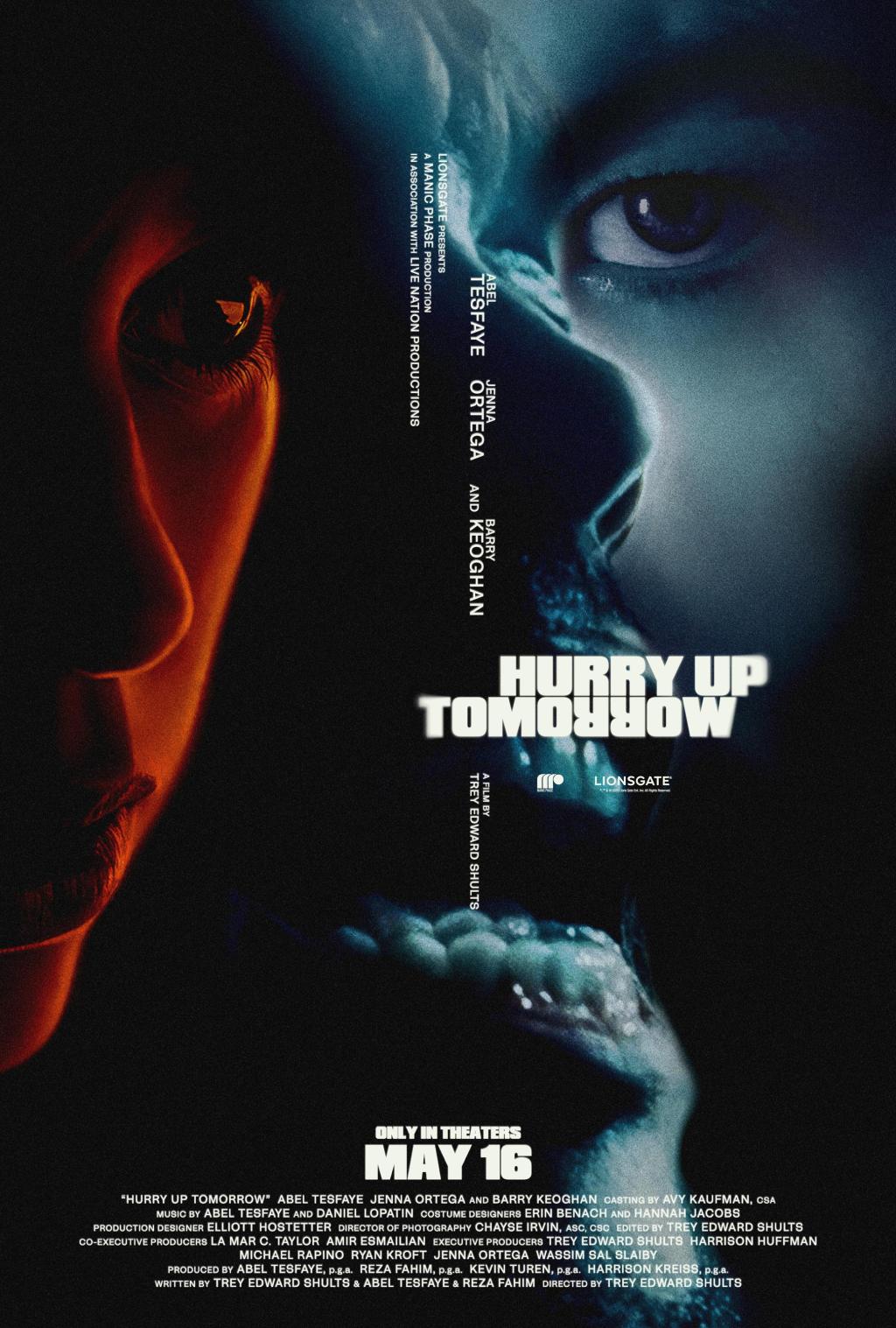
“How do I know tomorrow’s coming?” is the question viewers are left with once The Weeknd’s Hurry Up Tomorrow comes to an abrupt end.
Inspired by the loss of his voice during a performance at SoFi stadium in September 2022, the film explores letting go of his former self by bringing an end to this era as The Weeknd, while touching base with the theme of escapism by channelling inspiration from his experiences with sleep paralysis. The artist detailed how as well as the fear induced from losing his voice, this phenomenon is another key inspiration for the cinematic work he has spun together with director Trey Edward Shultz and fellow co-stars Jenna Ortega (Wednesday) and Barry Keoghan (Saltburn). Hurry Up Tomorrow intends to represent itself as a psychological thriller with hints of horror, but genre aside, how does this all interlink with what Abel Tesfaye is trying to portray? And beyond these subliminal meanings which require fan lore to be interpreted in detail, did he deliver with this major acting debut?
As an XO/The Weeknd fan, I received this experience with appreciation, understanding that the work has been marked as a “love letter,” from the artist to us. As a certified cinephile, who intends to view the delivered art holistically, I was left frustrated. I can acknowledge the concept the cast/director attempted to deliver however, the execution unfortunately fell flat. This breakdown will come across as polarising, but regardless I would like to provide my interpretation of this film, applying some Freudian concepts (as I did do A-level psych pre-MPharm after all) to Abel, Lee and Anima; the three characters driving the plot, whilst taking the time to highlight the film’s strengths and weaknesses. This is my take on Hurry Up Tomorrow (the film).
Lee | The ID
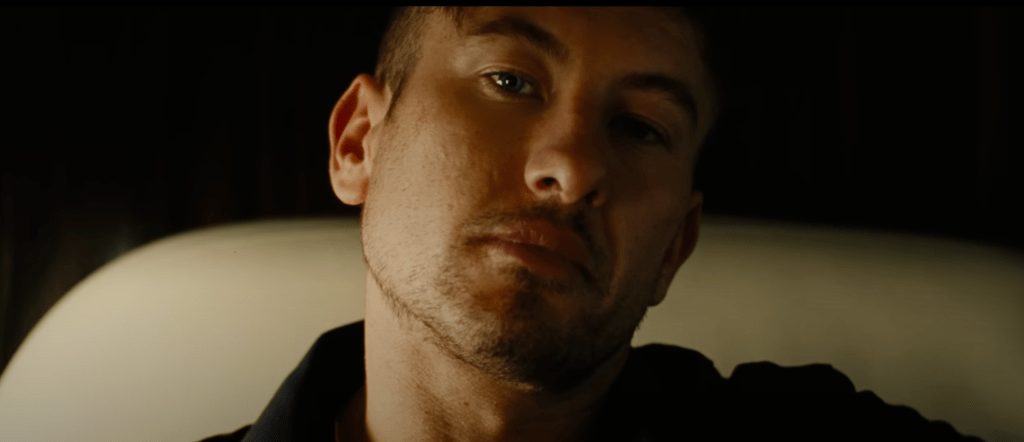
Impulsive. Vulgar. Pleasure driven. Lee indulges in and encourages Abel’s toxic behaviour serving his purpose as the part the star needs to convince himself that he isn’t a “normal human,” but in fact, a being that defies what it is to exist as a person with actual feelings because of his stardom. This is confirmed by the encouragement of substance use to aid the main character with unwinding, as well as giving him reality checks to avoid addressing the unnamed love interest, causing Abel to spiral significantly. On the surface Lee might appear to be a character that exploits the star’s moments of weakness; my initial thoughts of him based on the trailer, were that he would represent the ‘big boys’ (managers, reps, record labels) that have often been behind the exploitation of artists, including the most successful ones. My perspective changed further to the interview from Empire Magazine, which prompted me to go into the screening with the intention of observing the film in a different light. Therefore, from a psychoanalytical perspective which was the first thing that came to mind after Hurry Up Tomrrow‘s ending, Lee is a representation of all the bad habits the star leans into. The primal need to gain instant gratification from momentary actions. The ID.
Anima/ Ani | The Superego
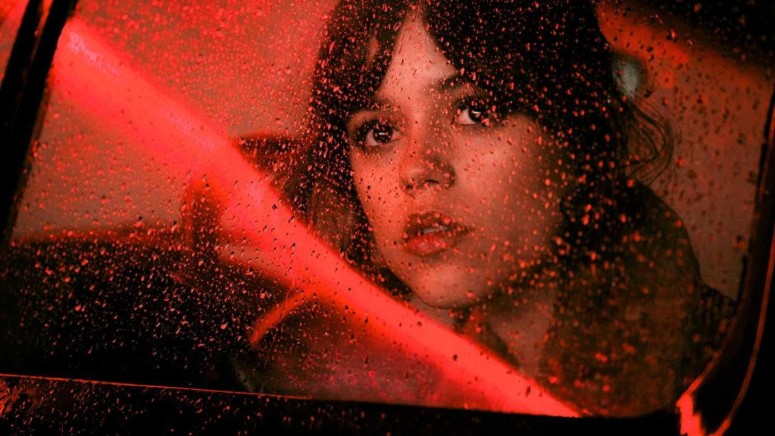
It would be a lie to describe Amina as someone who is completely rational or to be fooled by the sweet aura delivered by Jenna Ortega’s representation of this character. However, in comparison to Lee she is righteous, more in control/controlling and driven by a responsibility to deliver Abel to his own truth. This becomes clear by the possible overlap in circumstances, allowing their characters to relate to each other. The pair give us the portrayal of building a close relationship, but actually, this is Tesfaye’s attempt to let in the parts of himself he considers to be morally pure, and good. Confronting this part of himself, allows him to finish what we now know to be the outro/final by which the album is named Hurry Up Tomorrow. When this happens, it emerges in the form of a sung confession to the questions Amina breaks him with, resulting in his life being spared. Through the lens of psychoanalysis, I interpreted this as the Superego (Anima) asserting its dominance on the Ego (Abel), which until this point was ruled by the ID (Lee). Anima’s assertion of dominance is only temporary – or if not an illusion – as Abel’s walk out of the room in flames to Without a Warning, before preparing for his return on stage implies that neither of them were ever there (pun intended), leaving us – the viewers – temporarily stunned by the turn of events which becomes the film’s definitive ending.
Abel | The Ego
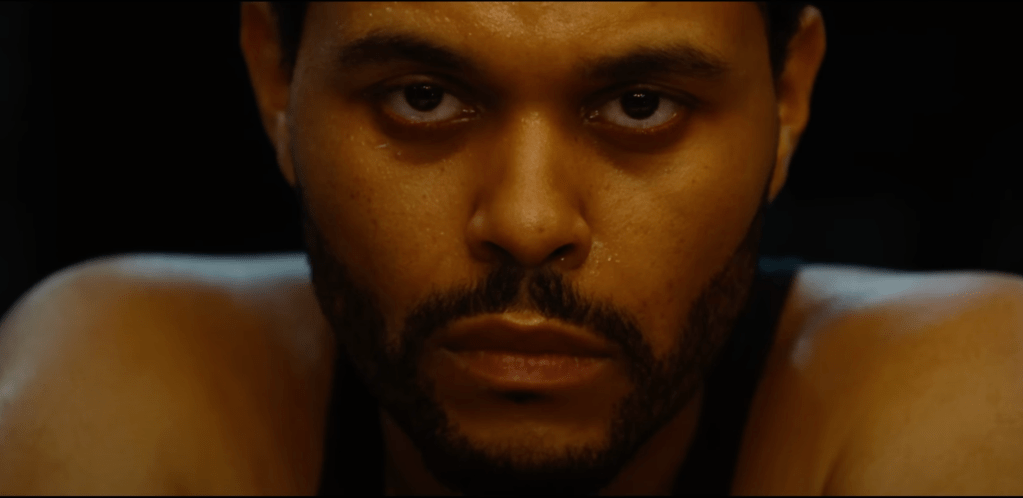
I’ve chosen to refer to Abel as the Ego, as opposed to The Weeknd, because a theme rooted in Hurry Up Tomorrow, is bringing an end to his former self (The Weeknd), allowing for the re-birth of what XO’s would believe to be his normal self. In psychoanalysis, the Ego is the fine balance between the primal impulses of the ID, and morality complex (this need to always be good and do the right thing) of the Superego. The brutal clash between Anima and Lee, results in Lee’s ending and in the moment when we see The Weeknd drowned in gasoline, we’re convinced that his end might be coming too. And it does, but in the metaphorical sense. The death of Anima isn’t portrayed in the way Lee’s is, but I don’t believe she’s the one who set fire to the room. Abel did it, burning everything in his path; mirroring one of the film’s opening sequences where Anima burns down her home. Following a confession given from Abel to Anima in the form of completing Hurry Up Tomorrow, his exit from the blazing room to backstage allows him to now stand alone as the Ego, in a position thrive, move on with his life, and finally gain control of consciously rationalising when faced with situations. I mean it is how he gets his voice back right? This represents Abel (as the Ego) gaining control, Abel getting his power back by leaving what was a part of his past behind him, and Abel being the ultimate reason for The Weeknd’s end.
The Not So Great
Any XO fan would argue that the interpretations go deeper as Hurry Up Tomorrow touches on the destruction of bad habits, moving on from the Trilogy era, and nurturing Abel’s inner child that represents purity, by proving he can become a better man. Fellow fans have articulated these theories laced with facts, in a much better way, hence why this review takes a psychoanalytical film analysis route, which I hope will suffice. The above character elements (even if this wasn’t their intended representation), along with leaving viewers asking questions, are the parts that make the film admirable. I respect the efforts applied to go above and beyond delivering a complimentary short film ‘for socials‘- and taking this to the big screen, even after criticism and cancellation of The Idol. The willingness to open up to the world about a struggle that seemed threatening at the time the event occurred (Septmber 2022) is raw, and I can appreciate that the film is what inspired the brilliance of the album.
It’s worth considering the stunning visuals that became transitional cut-scenes, and the efforts Tesfaye applied to demonstrate the complexity of his self-inserted character. However, from the perspective of those who love cinema, the euphoric edits were not enough to conceal the fact that a lot of the film felt like continuous segments of different music videos edited together. The continuous tears became one note, especially when let out so early on in the movie. This skill – impressive for a first major acting gig – inevitably lost its effect. This isn’t highlighted to disregard the visible sadness of the protagonist, but the performance didn’t cut deep enough to demonstrate the layers that accompany this emotion. Anger. Misery. It’s as if scratching the surface would appear to be enough, except from a cinematic standpoint it isn’t, especially when so much anticipation – film posters, stills, teaser trailers – was built around Hurry Up Tomorrow.
The delivery of certain lines, especially THAT ONE (we all know which one) left me questioning why nobody, openly and honestly told him, “hold up this isn’t it, let’s try this as many times as we need to because it’s your film. You wanna get this right,” as opposed to most likely saying, “annnd scene.” Especially when having the likes of 2 experienced leads, who of course, shouldn’t be responsible for coaching the artist through acting when they have their own roles to deliver, but I missed the part where their presence elevated his acting because in comparison they’re naturally gifted in this art, in the same way Tesfaye is naturally gifted in creating and performing music.
Tesfaye can SING for days. Understandably, acting isn’t his primary outlet for art. For that reason, I wish more time had been taken to nurture this skill, because unfortunately not much has changed since The Idol, besides the fact that this time around his character is a self-insert. There were impressive moments that landed well either because of the visuals or due to the support of Ortega and Keoghan’s characters who are talented actors, but this is something I feel the Weeknd shouldn’t have put a deadline on or rushed, even if the film was born before the album. Waiting a few more months – even a year – for a much more refined product, where his game as an actor could have elevated further, would have been much more satisfying to experience on screen, but we live in the era of using the present momentum/buzz to deliver. With the After Hours Till Dawn tour still active, juggling multiple commitments can’t be easy, however, taking more time would have made a difference.
From the perspective of a person who loves cinema, I respect him for being brave enough to let many into his mind, using a completely different method that isn’t music. On the other hand, as I discussed with my friend (Tara), to quote her: “The Weeknd the artistm and the Weeknd the actor, are two completely separate identities until further notice.” Regardless of the acting performance, I want to highlight key moments in Hurry Up Tomorrow’s plot, that serve as a means to winning viewership.
The Voice Break
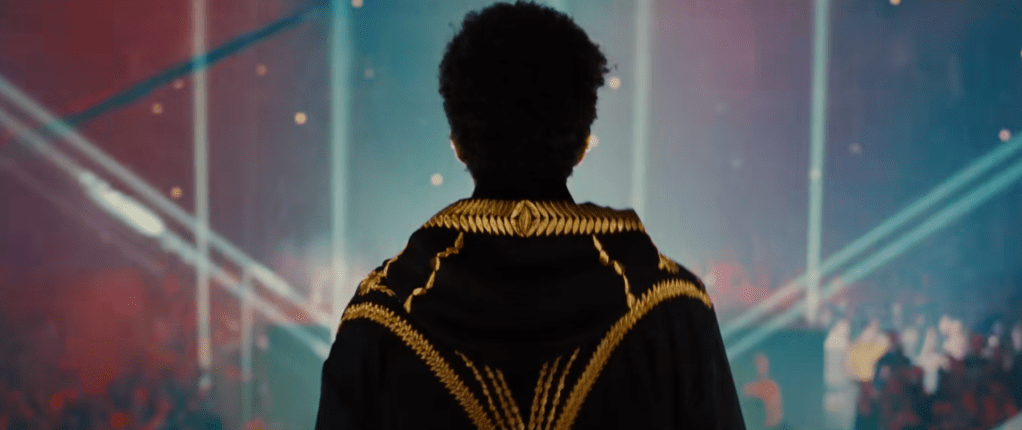
This event is core to the existence of the film and most likely the reason why it inspired the visuals before an incredible album, confirmed as the final instalment to the trilogy comprised of After Hours, Dawn FM and now Hurry Up Tomorrow. I found that moment immersible, forgetting that I was at a screening as opposed to a concert, which once again encourages me to emphasise the point of how skilful Tesfaye is as a performer. How natural it appears for him to be on stage, bringing a unique presence to a crowd that consists of many, which – having seen him perform twice – I can vouch for. Although the voice break in the film, would have been staged, it simulated what he was most likely going through when the event occurred, leaving me with the afterthought of “this must have torn his vocal cords apart.” And re-imagining this moment to the intro, Wake Me Up, as well? It was a chaotic, well-delivered scene that only served a piece of a moment of a psychological block, which caused Tesfaye’s voice to go. It may seem silly, but to contextualise it better, imagine being gifted with a talent, or having the one thing that keeps you going taken from you – with the possibility of not getting it back. Scary, right?
The Sleep Paralysis
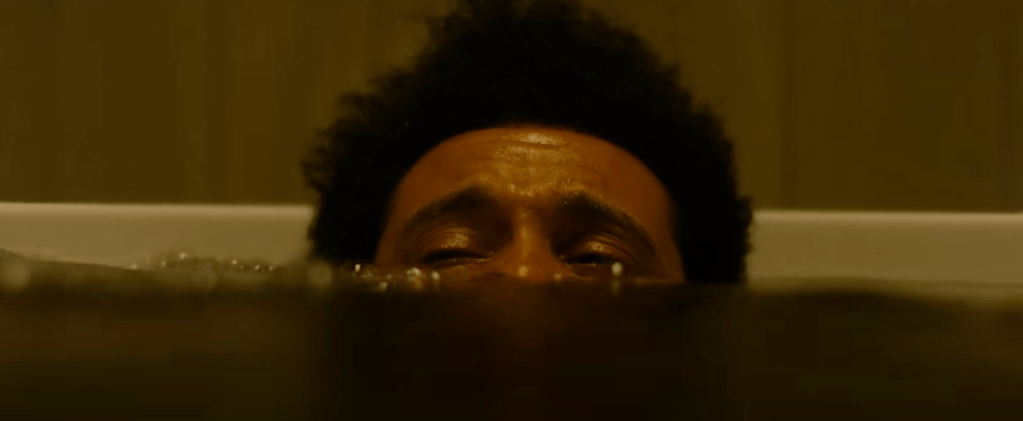
Scientific at its core but supernatural to many, sleep paralysis has also been raised as a key problem for the artist with key triggers including an irregular sleep pattern, stress and anxiety. Between travelling for shows that change time zones, along with the added pressure to deliver world-class performances, this makes sense. He succeeded in demonstrating it in a way that once again, immerses you in what this feels like. Between the bathtub scene (heavily detailed in Baptised in Fear), and that where Anima has kept him hostage by being tied to a bed, undoubtedly the second scene was what did it for me. Particularly the uncomfortable eye roll when stuck in a state of consciousness and sleep. This distressing, sleep-related condition – which isn’t in any capacity life-threatening – has been subject to discourse around its spiritual origins because of the hallucinations that arise in the form of visions, sounds and sensations. Most notoriously though, the pressurised feeling of being unable to move. As a regular sufferer myself, with ties to faith, I find that I prefer to rationalise the event from a scientific perspective (maybe because it scares me less). Grasping the understanding of what phase of sleep it occurs in (REM) along with potential causes (sleeping position, too much or too little sleep, jet lag, stress etc.) I picked up the pattern, responsible for its cause when having frequent encounters. With this respect, Hurry Up Tomorrow won me over. The scenes fabricated by blurred visions, along with the specific cut showing the artist’s attempts to wake out of it, – whilst being burdened by an overwhelming amount of anxiety – was demonstrated with every bit of accuracy. It also maybe explains the need to be “in tomorrow” because in a sleep paralysis episode all you want to do, is wake up. I enjoyed this element of the film for the reason that it hit the nail on the head, not missing. The representation felt real.
The Altercation. | The ID, Ego and Superego | Lee Abel Anima
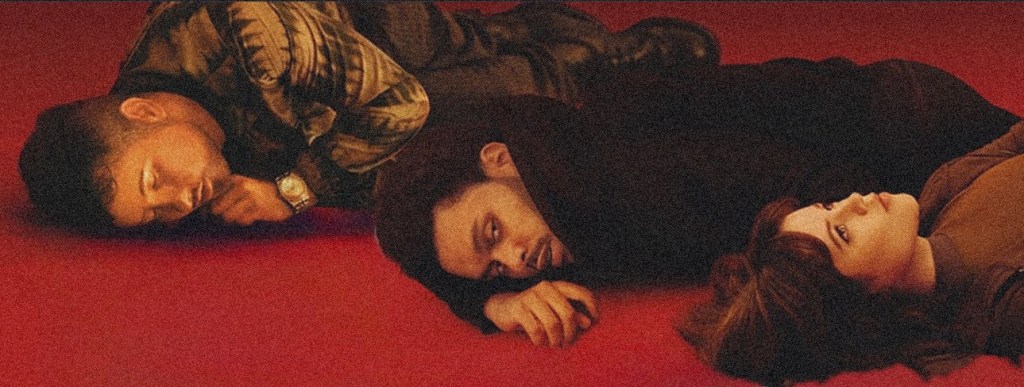
In no world would I imagine a petite girl like Jenna Ortega being able to tussle a grown man double, if not triple her size. For that reason, the way she and Barry Keoghan played this out on screen, was brilliantly intense. The brutal scene of Anima ending Lee was symbolic of bringing death to the dopamine-driven parts of who many may interpret The Weeknd to be. Despite this occurrence, once a confession is finally given from Abel to Anima, the scene cuts to the room ablaze and Abel walks from the hotel corridor to backstage. This leaves an ambiguity as to whether Anima – the Superego – won, or if Abel finally overruled two parts of himself that were at war with each other. I like to think the latter, with that being a statement to Tesfaye taking control of his narrative.
Final Thoughts
It’s fun to experience the excitement of seeing your favourite artist try something different, disregarding critics of The Idol (as well as its cancellation), and following through with taking it to the big screen. Singing along to songs featured in his discography, with the likes of Blinding Lights and Gasoline serving as easter eggs, was also great because it created a fan-tailored experience, and once again reinforces The Weeknd’s gift to deliver as a musician. If future attempts to further a career in acting are made, I will of course be seated but for now, my conclusion to Hurry Up Tomorrow is as follows: The film came first, but undoubtedly its counterpart, the album – the score – outshone it.
 KING A WRITINGS
Leave a comment